
If you are relocating to Hawaii with children, the school decision needs to come before the home search. It is easy to find a beautiful house, see a campus five minutes away on a map, and assume that is where your child will go. On Oahu, that assumption can create a very frustrating surprise.
The best schools in Oahu are not simply the highest ranked schools on a list. The right choice depends on your exact home address, your child’s academic and social needs, program availability, admissions timing, transportation, and your full education budget. A school ranking can help you build a smart shortlist, but it should never make the final decision for your family.
Key Takeaways
- Traditional public school assignment is based on the exact home address, not proximity or ZIP code.
- Rankings are useful starting points, but programs, support, campus environment, and admissions access matter just as much.
- Private school tuition, financial aid, and deadlines should be researched before narrowing a home search.
- Geographic Exceptions are not guaranteed and should not be the basis of a purchase decision.
Table of Contents
- How Public School Assignment Works On Oahu
- Top Public High Schools On Oahu
- Best Elementary Schools In Oahu To Research
- Private Schools And Tuition On Oahu
- Kamehameha Schools Tuition Update
- How To Compare The Best Schools In Oahu
- Geographic Exceptions And Mistakes To Avoid
How Public School Assignment Works On Oahu
Hawaii has one statewide public school system. Traditional public school assignment is generally determined by the exact residential address, not the neighborhood name, ZIP code, or whichever school happens to be closest on Google Maps.
That means two homes on different sides of the same street may feed into completely different school pathways. Before purchasing or renting a home near any of the best schools in Oahu, run the address through the Hawaii Department of Education school locator and confirm the assignment directly with the school.
This matters at every level. A family may be researching a particular elementary school, middle school, and high school sequence, only to discover the property they love does not connect to that pathway. Confirm the address first, then evaluate the house.
Top Public High Schools On Oahu
For families researching the best schools in Oahu, several public high schools consistently come up early. The following figures reflect current school profiles and 2026 rankings referenced from Niche, along with available state assessment information.
Mililani High School
Mililani High School ranks number one out of 60 public high schools in Hawaii in Niche’s 2026 list, as well as number one for public high school college prep. Its profile lists approximately 2,382 students, a 16:1 student to teacher ratio, and a 94% graduation rate.
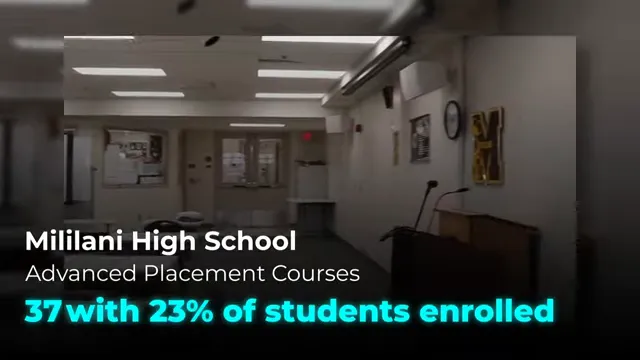
For the 2024 to 2025 assessment year, Mililani reported 68% reading proficiency and 48% math proficiency. The school also lists 37 AP courses, with 23% of students participating in AP coursework.
Those details are why it is important not to treat a ranking like a verdict. Graduation rate, reading and math proficiency, the AP catalog, AP participation, and student support all answer different questions. Strong numbers should start the conversation, not end it.
Roosevelt High School
Roosevelt High School, located above McCully and Punchbowl, ranks number eight out of 60 public high schools in Hawaii. Its profile lists 1,336 students, a 16:1 student to teacher ratio, and a 91% graduation rate. Current proficiency figures show 59% in reading and 33% in math.
Roosevelt lists 25 AP courses, and 28% of students are enrolled in AP classes. This is a good example of why schools in the same broad Honolulu conversation can still offer different data points, programs, campus environments, and student experiences.
Kalani High School And Kaiser High School
Kalani High School ranks number seven out of 60 public high schools and number six for public high school college prep. It lists 1,455 students, a 17:1 student to teacher ratio, a 93% graduation rate, 74% reading proficiency, 51% math proficiency, and 30 AP courses. About 29% of students are enrolled in AP coursework.
Further east, Kaiser High School ranks number 11 statewide and number eight for public high school college prep. Kaiser lists 1,073 students, a 16:1 ratio, and a 96% graduation rate. Its reported proficiency figures are 65% in reading and 45% in math.
Kaiser also offers an International Baccalaureate program. AP and IB are not the same path. AP typically allows students to choose individual college level courses. IB is generally more integrated, with its own sequence, requirements, and grade-specific entry points. Ask which IB programs are authorized, which grades participate, how students enter, and whether the structure fits your child.
Best Elementary Schools In Oahu To Research
Elementary school research needs to go beyond test scores. The best schools in Oahu for one family may be those with the right reading support, special education services, language program, class structure, before and after school care, and family communication.
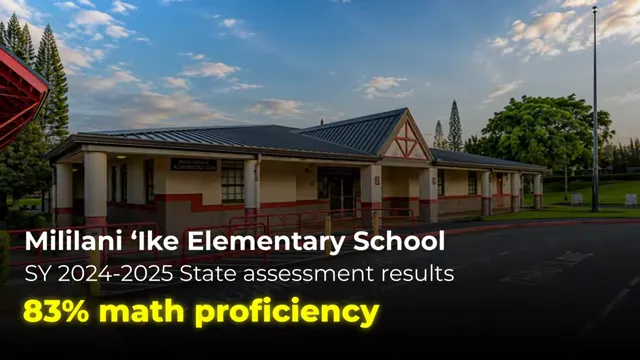
In Central Oahu, Mililani Iki Elementary School ranks number one out of 292 public elementary schools in the referenced statewide list. Its profile lists 409 students, a 14:1 student to teacher ratio, 83% math proficiency, and 82% reading proficiency.
Mililani Elementary School ranks number two out of 292. It lists 412 students, a 17:1 ratio, 81% math proficiency, and 84% reading proficiency. These schools make Central Oahu an important area for families, including households connected to Schofield Barracks or Wheeler, but exact address assignment still controls the traditional public school path.
On the Windward side, Kaʻelepulu Elementary Elementary School in the Kailua area ranks number three out of 292 public elementary schools. It lists 195 students and a 14:1 ratio, with math proficiency in the 75% to 79% range and reading proficiency in the 80% to 84% range.
Families also frequently research Aikahi Elementary, Lanikai Elementary, and the broader Kailua and Kalaheo pathways. Keep in mind that traditional public, charter, and private schools can sit close together geographically while using completely different enrollment processes.
Private Schools And Tuition On Oahu
Private education is a much bigger part of the conversation when relocating to Hawaii than many families expect. About 20% of Hawaii students attend private school, compared with roughly 10% nationally. The best schools in Oahu include major private campuses, but Oahu also offers religious schools, smaller independent schools, specialized programs, and options at different tuition levels.
Iolani School
Iolani ranks number one among private high schools, private K through 12 schools, and STEM schools in Hawaii on Niche’s 2026 rankings. Its current profile lists 2,263 students and a 10:1 student to teacher ratio.
Published 2026 to 2027 tuition is $32,890, plus a $525 annual technology fee. The school reports a $9 million financial aid budget, with approximately 23% of students receiving aid and an average award of about $15,400.
Punahou School
Punahou ranks number two for private high schools, K through 12 schools, and STEM, while ranking number one for athletics. Its profile lists 3,744 students and a 10:1 student to teacher ratio. Published 2026 to 2027 tuition for kindergarten through grade 12 is $34,230.
Punahou reports a $10.8 million financial aid budget. About 23% of students receive need-based aid, with an average award of approximately $12,600. Its larger campus and enrollment can mean a broad range of classes, activities, and teams. For some students that scale is a strength. Others may want a smaller environment.
Mid-Pacific And Le Jardin Academy
Mid-Pacific ranks number six among private high schools and number five among private K through 12 schools. It lists about 1,400 students, a 9:1 student to teacher ratio, and published 2026 to 2027 tuition of $33,315. The school offers an IB Diploma Program and a School of the Arts with a project based learning option.
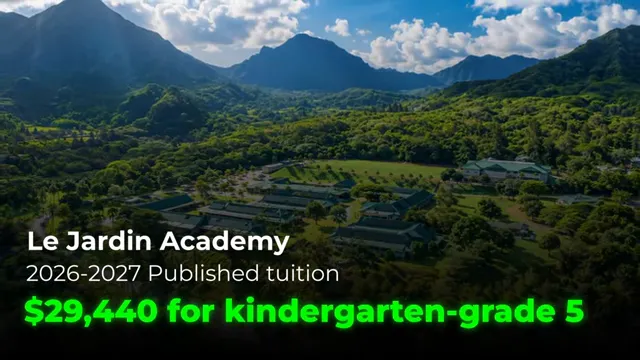
Le Jardin Academy ranks number four among private high schools and K through 12 schools. It lists 928 students and a 6:1 ratio. It is the only school in Hawaii authorized to offer a complete International Baccalaureate Continuum, from the Primary Years Program through the Diploma Programme.
Its published 2026 to 2027 tuition ranges from $19,710 for preschool to $29,870 for grades 6 through 12. Approximately 20% of students receive financial aid, with an average award above $9,500. For families seeking the best schools in Oahu with a continuous IB experience, Le Jardin’s program may carry more weight than a small difference in rank. The Windward commute should be part of that practical conversation, too.
Kamehameha Schools Tuition Update
Kamehameha Schools offers a kindergarten through 12th grade education grounded in Hawaiian culture and values. Its admissions policy gives preference to applicants of Hawaiian ancestry to the extent permitted by law.
Kamehameha announced a proposal to eliminate tuition beginning in the 2026 to 2027 school year, pending probate court approval. This is a major development in Hawaii’s private school conversation, but it remains important to understand the admission policy, process, timing, campus experience, and fit for your child.
How To Compare The Best Schools In Oahu
Once you have a map full of possibilities, do not ask only which school has the highest number. Compare the best schools in Oahu through four practical lenses.
- Academics and programs: Consider AP, IB, STEM, arts, music, athletics, career and technical education, language support, special education services, and counseling. Ask whether the program has prerequisites, limited seats, or grade-specific entry points.
- Environment: Review total enrollment, student to teacher ratio, campus structure, daily schedule, and transition support. A large campus is not automatically better or worse than a smaller one.
- Cost and financial aid: At published 2026 to 2027 rates, 13 years at Punahou is approximately $444,990, Iolani is approximately $427,570 before technology fees, and Mid-Pacific is approximately $433,095 before annual increases. Aid can be meaningful, but families must apply and awards are not guaranteed.
- Admissions and timing: Ask about entry grades, application windows, testing, interviews, recommendations, records, and decision dates. Your school application calendar and your relocation calendar should run in parallel.
|
Geographic Exceptions And Mistakes To Avoid
Hawaii has a Geographic Exception process, often called a GE, that allows a family to apply to attend a public school outside the assigned attendance area. A GE is an application, not a guarantee. Approval depends on available space, and the general application period for the following school year is January 1 through March 1.
I have seen families build their entire housing plan around a GE request, only to learn that the receiving school had no capacity. Treat a GE as a possible option, never as the foundation for purchasing a home.
When relocating to Hawaii, avoid these three mistakes:
- Buying or renting without confirming the assigned school: Verify the exact address through the official locator and the school itself.
- Treating a ranking as the final answer: Look behind the number at proficiency, graduation, AP or IB access, program availability, campus size, and student support.
- Starting private or charter research too late: Tuition, aid, lotteries, application deadlines, and admissions calendars can change the plan before your home search begins.
The school decision shapes the home-search map on Oahu, but the school itself should remain at the center of the decision. Before falling in love with a property, verify the assignment. Before relying on a rank, study the program and the data behind it. And before choosing among the best schools in Oahu, make sure you understand the cost, admissions process, commute, and what your child will actually experience each day.
Frequently Asked Questions About Schools On Oahu
How are public schools assigned on Oahu?
Traditional public school assignment is generally based on the exact residential address. Confirm every serious address through the Hawaii Department of Education school locator and directly with the school.
Can a child attend a public school outside the assigned area?
Families may apply for a Geographic Exception, or GE. Approval is not guaranteed because it depends on factors including space at the receiving school.
What should families compare besides school rankings?
Compare academic programs, AP or IB access, proficiency, graduation rate, campus size, student to teacher ratio, support services, transportation, admissions requirements, timing, tuition, and financial aid.
Why should private school planning begin early when relocating to Hawaii?
Private schools may have specific entry grades, application windows, testing, interviews, recommendations, records requirements, and financial aid deadlines. Those details can affect the full relocation and housing timeline.