
Central Oahu Neighborhood Guide: Where to Live When Moving to Oahu, Hawaii
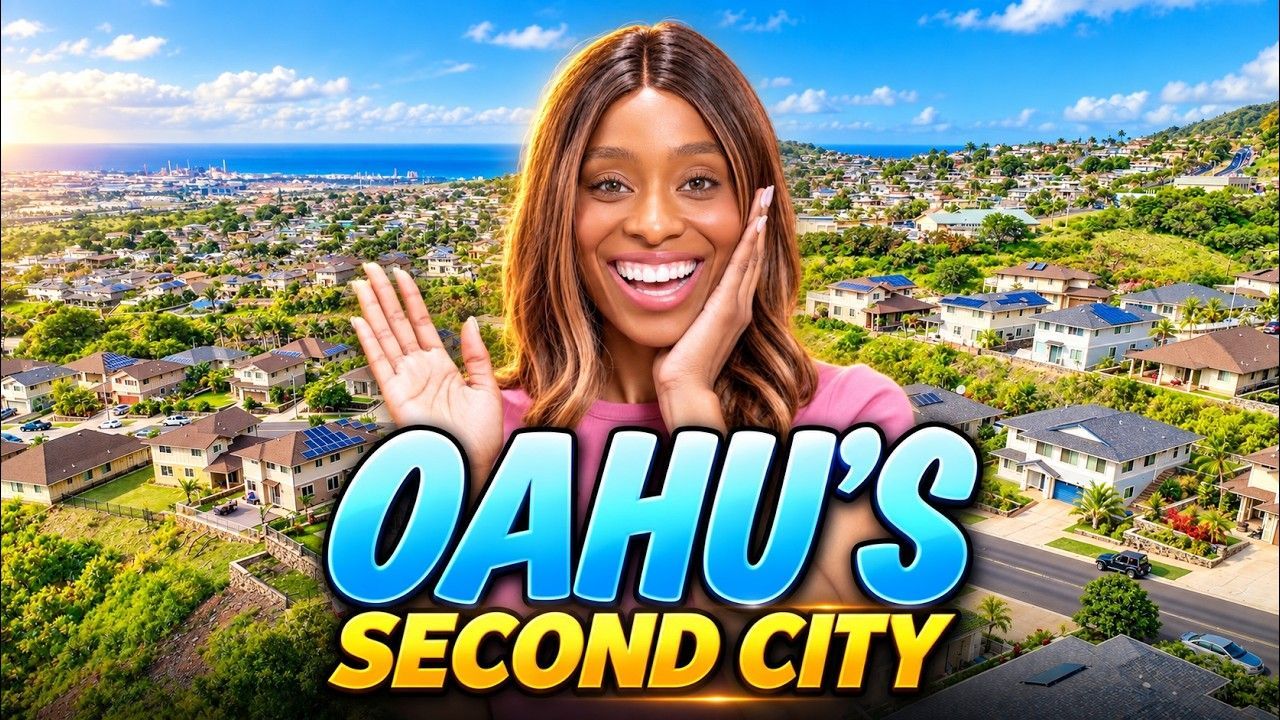
Central Oahu is the part of the island most people don't picture until they actually start house hunting and then it quickly becomes the answer to almost everything. It's where the H-1 and H-2 freeways meet, where Schofield Barracks and Wheeler Army Airfield anchor an entire local economy, and where generations of plantation-era immigrant communities built the neighborhoods that still define the region today. For anyone moving to Oahu and trying to figure out the best neighborhoods to live in, Central Oahu deserves a much closer look than a quick freeway drive-through gives it credit for.
This guide walks through the neighborhoods that make up Central Oahu: ʻAiea, Pearl City, Waipahu, Waikele, Royal Kunia, Waipiʻo, Mililani, and Wahiawa with a dedicated section for each one covering location, lifestyle, dining and shopping, parks and schools, and real Hawaii real estate insight. Whether you're relocating for a job, a lifestyle change, or a PCS to one of the region's military installations, this is the practical, area-by-area breakdown to start your search with.
Why Central Oahu Draws So Many New Residents
Central Oahu sits geographically and functionally at the crossroads of the island. The H-1 and H-2 freeways run through it, connecting Honolulu and Pearl Harbor to the south with Schofield Barracks, Wheeler Army Airfield, and the North Shore beyond. That central position is exactly why so many people moving to Oahu end up here: it's rarely the closest neighborhood to any one destination, but it's almost always a reasonable drive to everything: work, the beach, the airport, and the rest of the island.
It's also historically one of the most diverse parts of Oahu. Much of Central Oahu grew up around sugar and pineapple plantations in the late 1800s and early 1900s, and the immigrant communities who worked those fields, Japanese, Chinese, Filipino, Portuguese, Korean, and Okinawan families among them shaped the local culture, food, and neighborhoods that still define the region today. Layered on top of that plantation history is a strong military presence: Schofield Barracks and Wheeler Army Airfield have been fixtures of Central Oahu since the early 1900s, and the surrounding towns have long depended on and welcomed military families as part of the community fabric.
ʻAiea
Overview and Location
ʻAiea sits just above Pearl Harbor, with ʻAiea Heights climbing into the hills for some of the best panoramic views in Central Oahu. The H-1 freeway runs along its southern edge, giving residents quick access to Honolulu in one direction and Pearl City and Waipahu in the other.
Lifestyle and Atmosphere
ʻAiea has a settled, small-town feel despite sitting minutes from one of the busiest parts of the island. Housing skews older, with a mix of mid-century single-family homes on quiet cul-de-sacs, giving the neighborhood a local, tight-knit character that residents consistently point to as one of its biggest draws.
Dining, Shopping, and Entertainment
Pearlridge Center, the largest indoor shopping mall in Hawaii, anchors ʻAiea with more than 170 stores connected by a monorail between its two sections. Local dining favorites include Forty Niner Restaurant for breakfast and Big City Diner for casual comfort food, plus food trucks that regularly set up near the mall.
Parks and Schools
Outdoor recreation is one of ʻAiea's strongest features. Keaiwa Heiau State Recreation Area offers camping and the nearly five-mile ʻAiea Loop Trail, with views stretching to Diamond Head on a clear day, while ʻAiea Bay State Recreation Area and Halawa District Park round out the neighborhood's green space. Families are served by Gus Webling Elementary, ʻAiea Intermediate, and ʻAiea High School, home of the "Nā Aliʻi."
Housing and Real Estate
Condos in ʻAiea generally run $300,000 to $400,000, below the island-wide condo median, while single-family homes in ʻAiea Heights typically fall between $700,000 and $950,000. It's a popular pick for anyone comparing Hawaii real estate near Pearl Harbor and Camp Smith.
Who It's Best Suited For
ʻAiea suits buyers who want proximity to Pearl Harbor without Honolulu-level density especially those drawn to a quieter, elevated single-family setting with strong hiking access nearby. It's also a common choice for those on a PCS to Joint Base Pearl Harbor-Hickam or Camp Smith looking for an established, off-base neighborhood.
Pearl City
Overview and Location
Pearl City sits along the northern shore of Pearl Harbor, about 11 miles west of downtown Honolulu, bordered by ʻAiea to the east and Waipahu to the west. It traces its roots back to the 1880s, when it was the final stop on the original Oahu Railway, long before the Navy established Pearl Harbor in 1899.
Pearl City is a practical, family-centered suburb spread across distinct pockets like Manana, Pearlridge, Waimalu, and Pearl City Heights, each with its own character. It's home to roughly 45,000 residents and has a genuine hometown pride streak. Pearl City Little League teams have made multiple runs at the Little League World Series, and Miss Universe 1997 Brook Lee grew up here.
Dining, Shopping, and Entertainment
Pearl City shares access to Pearlridge Center with neighboring ʻAiea, plus its own Pearl City Shopping Center anchored by a Foodland supermarket. The food scene leans local and affordable, with Filipino, Japanese, Korean, and Chinese restaurants throughout, and neighborhood institutions like Zippy's Pearl City and Gina's Bar-B-Q serving up classic plate lunch fare.
Parks and Schools
Pearl City has an unusually strong parks system for its size, including Pearl City District Park with its pool and ball fields, Waiau District Park's Tuesday farmers market, and the Manana Ridge Trail for hikers chasing sweeping Leeward Coast views. Elementary options include Momilani, Palisades, Pearl City, Pearl City Highlands, Waimalu, and Waiau, feeding into Highlands Intermediate and Pearl City High School.
Housing and Real Estate
Like ʻAiea, condos in Pearl City generally fall in the $300,000–$400,000 range, while single-family homes run higher, typically $700,000 to $950,000. It remains one of the more accessible entry points into the Central Oahu real estate market for buyers who want an established neighborhood over new construction.
Who It's Best Suited For
Pearl City works well for buyers who want a genuine middle ground, more residential variety than ʻAiea, an established school and parks network, and a short commute to Pearl Harbor, Camp Smith, and even Schofield Barracks.
Waipahu
Overview and Location
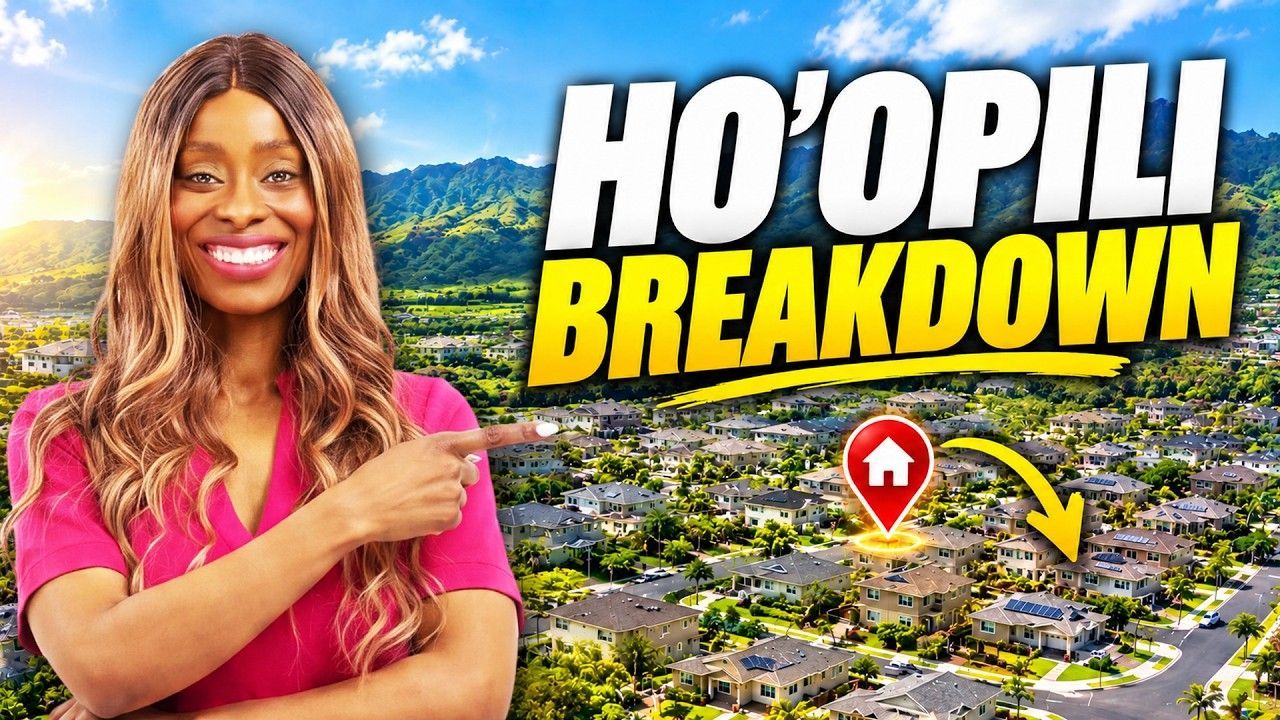
Waipahu sits about 15 miles west of downtown Honolulu, spanning three historic ahupuaʻa (land divisions): Waipiʻo, Waikele, and Hōʻaeʻae. Both the H-1 freeway and Farrington Highway run through it, and the neighboring communities of Waipiʻo, Village Park, Royal Kunia, and Waikele all use Waipahu as their postal city.
Waipahu carries some of the deepest cultural roots in Central Oahu. It grew up around the Oahu Sugar Company mill, which operated from 1897 until 1995, and drew laborers from Japan, China, the Philippines, Portugal, Korea, and beyond — a heritage that's still reflected in the neighborhood's food, festivals, and predominantly Filipino community today.
Dining, Shopping, and Entertainment
Hawaiʻi's Plantation Village, a 50-acre living history museum with restored plantation-era homes, is Waipahu's signature cultural landmark and a genuine point of local pride. Several shopping centers line Waipahu's main street, and the neighborhood's food scene reflects its plantation-era diversity, from Filipino to Japanese to Portuguese-influenced dishes.
Parks and Schools
L'Orange Park, built around 1924 as a ballpark for plantation workers, still hosts baseball today, and the neighborhood is home to the Waipiʻo Little League team that won the 2008 Little League World Series. Waipahu is served by the Hawaii Department of Education, with Waipahu High School and Waipahu Intermediate anchoring the local public school pipeline.
Housing and Real Estate
Waipahu offers some of the more affordable single-family and condo options in Central Oahu relative to the island-wide Hawaii real estate median, making it one of the more accessible entry points for first-time buyers and military families alike. Its close proximity to Joint Base Pearl Harbor-Hickam and the island's rail line has also made it increasingly popular for buyers prioritizing value and commute together.
Who It's Best Suited For
Waipahu suits buyers who want an authentic, culturally rich neighborhood with strong community identity, an easier price point than much of the island, and reasonable access to Pearl Harbor and the H-1/H-2 corridor including many families on a PCS looking for the most affordable entry point on Oahu's leeward side.
Waikele
Overview and Location
Waikele is a small, master-planned subdivision of Waipahu built in the 1990s, sitting just above where the H-1 and H-2 freeways split. Its position right at that interchange makes it one of the quicker Central Oahu commutes into Honolulu.
Waikele is newer and more compact than much of Central Oahu, built around roughly 3,000 residential properties mostly low-rise townhomes alongside a smaller share of single-family homes — wrapped around the Waikele Golf Club. It has a tidy, walkable layout with plenty of greenery, and it's governed by the Waikele Community Association.
Dining, Shopping, and Entertainment
Waikele's biggest draw is the Waikele Premium Outlets, the premier discount shopping destination in Hawaii and a major attraction for both residents and visitors. Beyond the outlets, the neighborhood has its own Safeway, a Lowe's Home Improvement Center, and a mix of casual dining options.
Parks and Schools
The Waikele Golf Club, an 18-hole resort-style course, wraps through much of the neighborhood, with several homes offering golf course frontage. Waikele falls within the Pearl City–Waipahu school complex area for public school enrollment.
Housing and Real Estate
Waikele's housing stock is a mix of townhomes and single-family homes built primarily in the 1990s, tends to be newer than much of the rest of Central Oahu, which appeals to buyers who want more modern construction without paying Honolulu prices. It's often described as a strong option for first-time homebuyers looking for value in the broader Oahu real estate market.
Who It's Best Suited For
Waikele is a good fit for buyers who want a newer, well-maintained community with a shorter commute to Honolulu and Pearl Harbor than much of Central Oahu offers, plus the convenience of shopping and golf right outside the front door.
Royal Kunia
Overview and Location
Royal Kunia sits above the Ewa Plain, technically a subdivision of Waipahu, positioned just off an H-1 exit that also offers one of the more direct back routes up to Schofield Barracks.
Royal Kunia was developed largely in the 1990s by Castle & Cooke, the same master-planned-community playbook the company used in Mililani Mauka and it shows: wide streets, sidewalks throughout, and a clean, consistent look across the neighborhood. It's also notable for having an unusually high concentration of military households relative to other U.S. neighborhoods, giving it a genuine sense of shared military community.
Dining, Shopping, and Entertainment
Three shopping centers sit right at the Royal Kunia off-ramp, along with the Royal Kunia Shopping Center's dining and retail options, giving residents day-to-day convenience without needing to leave the neighborhood.
Parks and Schools
Royal Kunia has a private, gated neighborhood park accessible only to residents, plus access to the nearby Royal Kunia Country Club golf course. Students are zoned for Hawaii public schools including Waipahu High School and Waipahu Intermediate, since Royal Kunia doesn't yet have its own school on-site.
Housing and Real Estate
Homes in Royal Kunia tend to be newer, two-story properties with open floor plans, and thanks to its elevated position above the Ewa Plain many offer ocean and Diamond Head views not typically found at comparable price points elsewhere on Oahu. It remains one of the more popular Central Oahu communities for buyers who want a clean, planned-community feel over an older, more established neighborhood.
Who It's Best Suited For
Royal Kunia is a strong match for buyers headed to Schofield Barracks who want one of the fastest back-gate commutes on the island, along with families who prioritize a newer, well-organized community with strong curb appeal and a built-in military neighbor base.
Mililani
Overview and Location
Mililani is split into two distinct sections: Mililani Town on the western side of the H-2 and the newer Mililani Mauka to the east, sitting almost exactly halfway between Honolulu and the North Shore, and just a short hop from Schofield Barracks.
Mililani was developed by Castle & Cooke starting in the late 1960s, turning former pineapple fields into one of Oahu's first true master-planned communities. It's widely considered one of the best neighborhoods to live in on Oahu for families, with sidewalks throughout, tree-lined streets, and a strong sense of community that residents consistently point to as its defining feature.
Dining, Shopping, and Entertainment
Mililani Town Center is the largest shopping center in Central Oahu, anchored by a Foodland and rounded out by local eateries, a Costco nearby, and everyday services like banks and medical offices. The Mililani Farmers Market runs every Sunday at Mililani High School.
Parks and Schools
Every home in Mililani sits within walking distance of a neighborhood park, and the community operates seven recreation centers and pools maintained through the Mililani Town Association. Schools are one of Mililani's biggest selling point. Mililani High School is widely ranked among the top public high schools in Hawaii, and the elementary pipeline, including Mililani Waena, Mililani Mauka, Mililani Uka, and Mililani Ike, consistently scores well in state rankings.
Housing and Real Estate
Homes in Mililani Town typically start in the mid-$900,000s and can push past $1.5 million depending on condition and location, with Mililani Mauka often running even higher given its newer construction. Compared to premium neighborhoods like Kailua or Hawaii Kai, buyers here generally get more house and stronger schools for the price.
Who It's Best Suited For
Mililani is frequently cited as the top pick for military families on a PCS to Schofield Barracks or Wheeler Army Airfield, thanks to a commute that often runs just 10 to 15 minutes. It's equally strong for any family prioritizing schools, safety, and a central location over beach proximity.
Wahiawa
Overview and Location
Wahiawa sits directly adjacent to Schofield Barracks, separated from most of the base by Lake Wilson (also called the Wahiawa Reservoir), and serves as the gateway between Central Oahu and North Shore life.
Wahiawa's history runs through Hawaii's pineapple industry it was the epicenter of Dole Food Company's pineapple cultivation for much of the 20th century and that plantation-era character still shows in its older buildings and small-town feel. It's also long been closely tied to the military, having grown alongside Schofield Barracks since 1908 and Wheeler Army Airfield since 1920.
Dining, Shopping, and Entertainment
Everyday needs are covered by Foodland, Tamura's Market, Longs Drugs, and Walgreens, while a revitalization of Kamehameha Highway has brought in locally owned cafés and boutiques. The nearby Dole Plantation remains a major attraction, featuring the Pineapple Garden Maze — once a world record holder for the largest maze on record and a scenic train tour through the pineapple fields.
Parks and Schools
Wahiawa offers hiking through the Wahiawa Hills Trail, with panoramic views over town and the surrounding valleys. On base, Schofield Barracks has its own DOE schools, Solomon Elementary and Daniel K. Inouye Elementary while Wahiawa's public options include Wahiawa Elementary, Wahiawa Middle School, and Leilehua High School, a Blue Ribbon school first established in 1924.
Housing and Real Estate
Wahiawa consistently offers some of the most affordable housing in Central Oahu, with older homes and larger lots compared to newer developments elsewhere on the island, a meaningful draw for buyers prioritizing value over new construction.
Who It's Best Suited For
Wahiawa is often the top choice for anyone on a PCS to Schofield Barracks who wants the shortest possible commute and the most affordable price point in the area, along with buyers who appreciate a traditional, older Oahu neighborhood with a cooler climate and genuine small-town character.
Choosing the Right Central Oahu Neighborhood
With eight distinct communities packed into one region, the right choice in Central Oahu comes down to a few consistent questions: How close do you need to be to Schofield Barracks versus Pearl Harbor? Do you want an established, older neighborhood like ʻAiea, Pearl City, or Wahiawa, or a newer master-planned community like Mililani, Waikele, Royal Kunia, or Waipiʻo's Koa Ridge? And how much does school quality weigh into your decision, given how much variation exists even within this single region?
For anyone moving to Oahu whether for a new job, a lifestyle change, or a PCS to one of the area's military installations, Central Oahu offers some of the most practical, well-rounded options anywhere on the island: reasonable commutes in multiple directions, strong public schools in several communities, and consistently more accessible pricing than Honolulu's South Shore or the Windward Coast. It's not the flashiest region on Oahu, but for day-to-day livability, it's hard to beat.
Ready to See the Whole OAHU Island?
The Central Oahu is just one piece of the puzzle and picking a neighborhood without seeing how it stacks up against the rest of Oahu is how people end up with a rough commute or a budget that doesn't fit their lifestyle. Watch the full Oahu map walkthrough to see every region side by side: cost, commute times, schools, and hospitals so you can choose with the whole picture in front of you, not just one corner of it.
Teondra Mills | Pacific Luxe Group
If you are looking for a trusted advisor who delivers elevated service, understands Hawaiʻi real estate with deep Oʻahu expertise, and treats every client like ʻohana, you are in the right place.
Recent Posts